Build a Career in the Industry That Connects India to the World

India’s aviation sector is becoming bigger, busier, and more operationally sophisticated. The School of Aviation prepares students for practical careers in airport operations, passenger services, ground handling, cargo, ticketing, and airline support functions through structured, job-linked learning.

Program Overview

Why Aviation Is Becoming a Bigger Career Opportunity in India

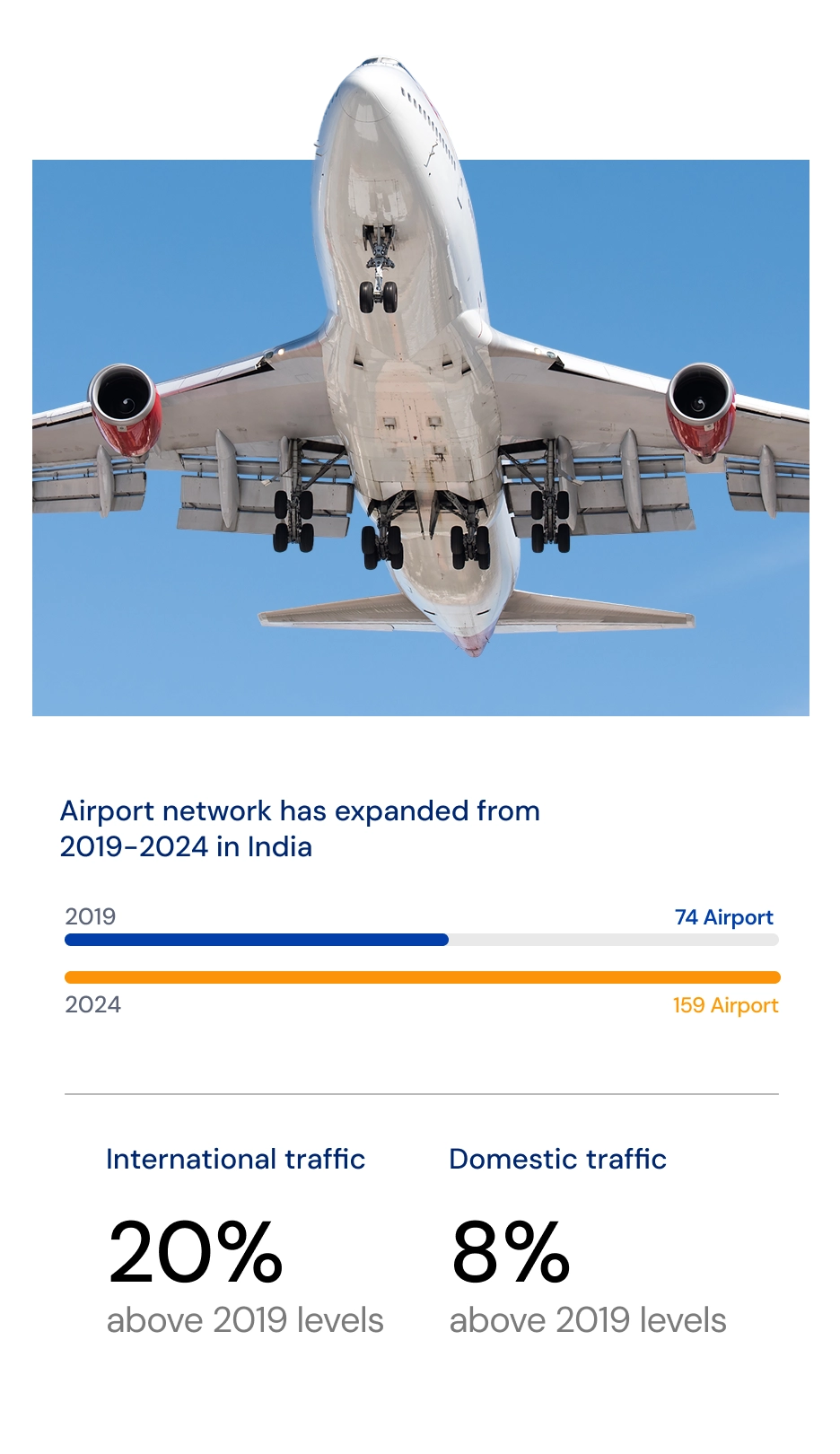
Aviation is no longer a niche sector. It is now a major part of how India moves people, connects cities, supports trade, and builds modern infrastructure. IATA states that India is now the third-largest air transport market in the world by departing origin-destination passenger traffic, with around 174 million passengers travelling from and within India by air in 2024. International traffic is already almost 20% above 2019 levels, while domestic traffic is more than 8% above 2019.

This growth is also visible in airport expansion. Government data says India’s airport network has expanded from 74 airports in 2014 to 159 in 2024. Under UDAN, 625 routes have been operationalised, connecting 90 airports, including heliports and water aerodromes, and benefiting more than 1.49 crore passengers. That means more terminals, more counters, more baggage activity, more service operations, and more organised entry-level jobs across the aviation ecosystem.

The infrastructure push is now material. PIB states that under the National Infrastructure Pipeline, more than ₹91,000 crore was envisaged for airport infrastructure development during FY2019-20 to FY2024-25, with about ₹82,600 crore already spent by November 2024. The same update notes that 12 greenfield airports have already been operationalised, with more projects under development.


This is why aviation is worth considering seriously. It sits at the intersection of transport, infrastructure, tourism, customer service, cargo, and regional development. It is a field with visible entry roles, strong identity value, and room to grow.

3rd

India’s rank globally in air transport (IATA)

174 M

Passengers travelling from/within India by air (2024)

+20%

International traffic vs 2019

74 159

Airports grew from 2014 to 2024

625

UDAN routes operationalised

1.49 crore

Passengers benefited via UDAN

₹91,000 cr

Airport infrastructure pipeline envisaged

12

Greenfield airports already operationalised

— CAREERS & OUTCOMES

Real Job Roles. Real Work. Real Progression.

The School of Aviation is built around roles that airports, airlines, ground-handling companies, and cargo operators actually hire for.

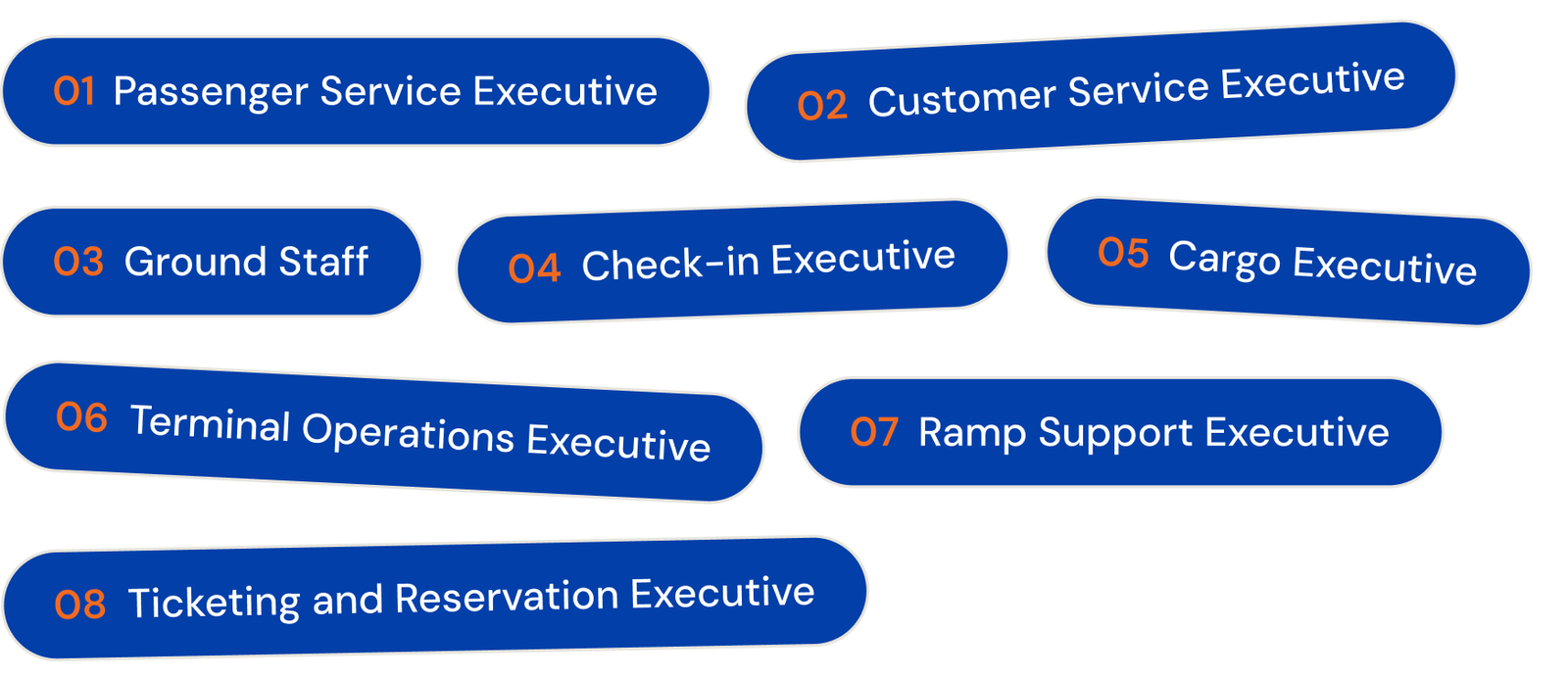
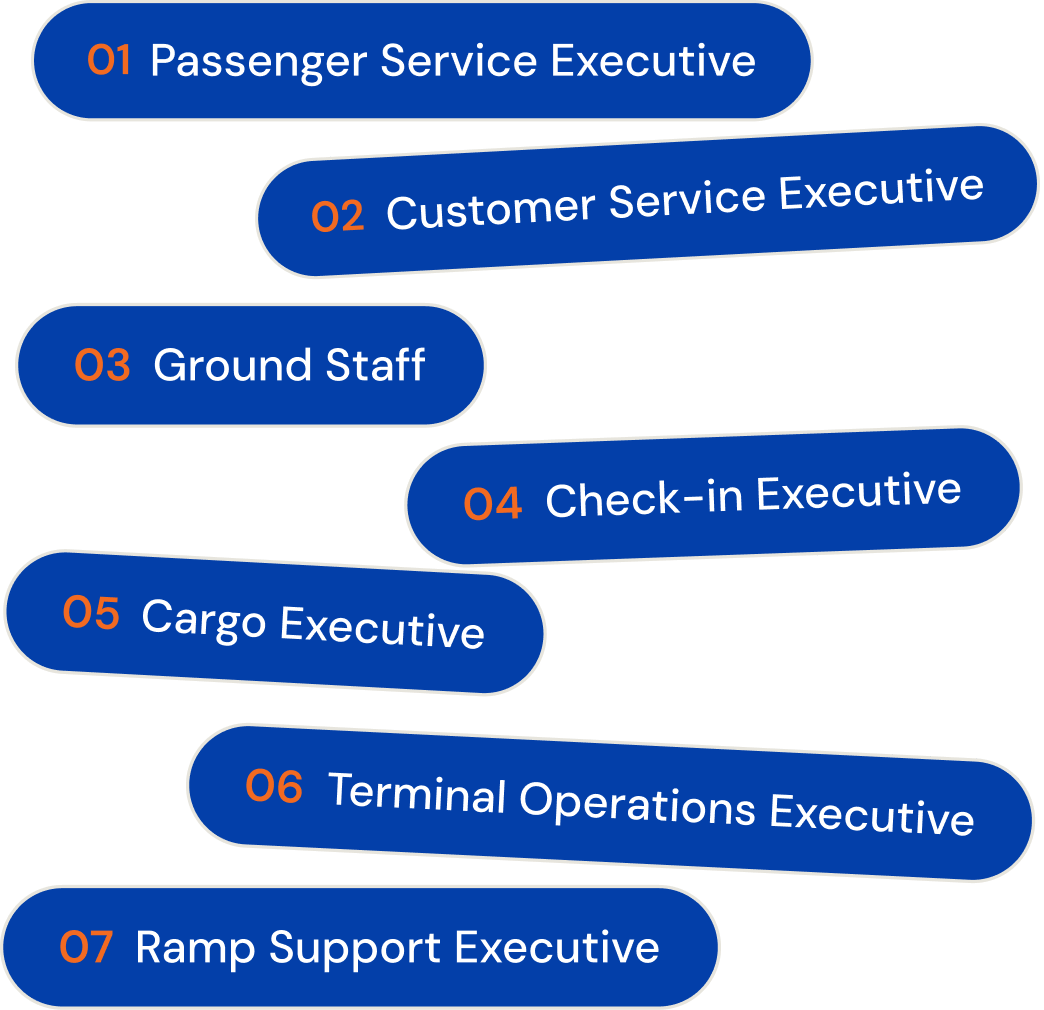
ENTRY-LEVEL ROLES YOU'LL BE READY FOR

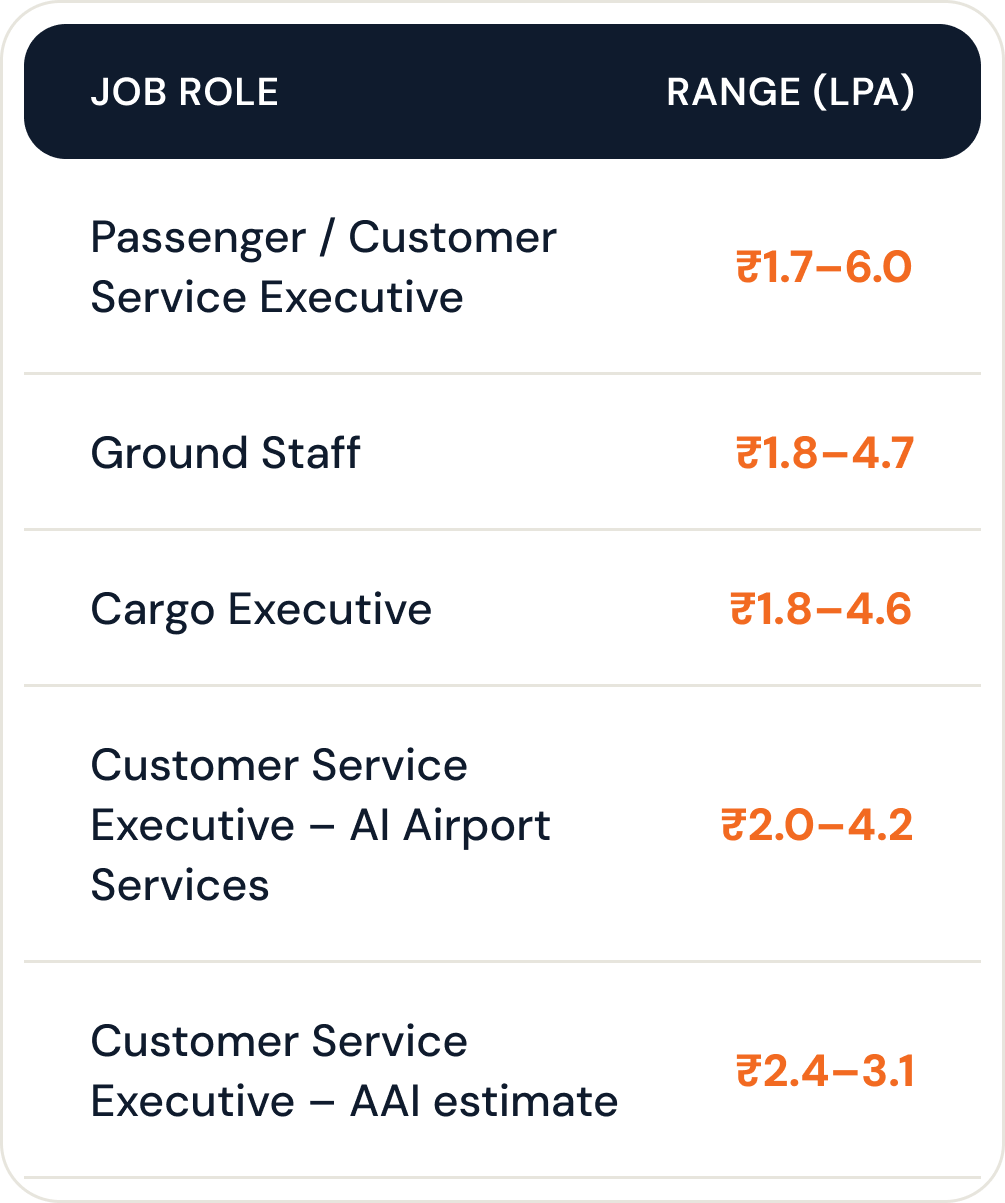
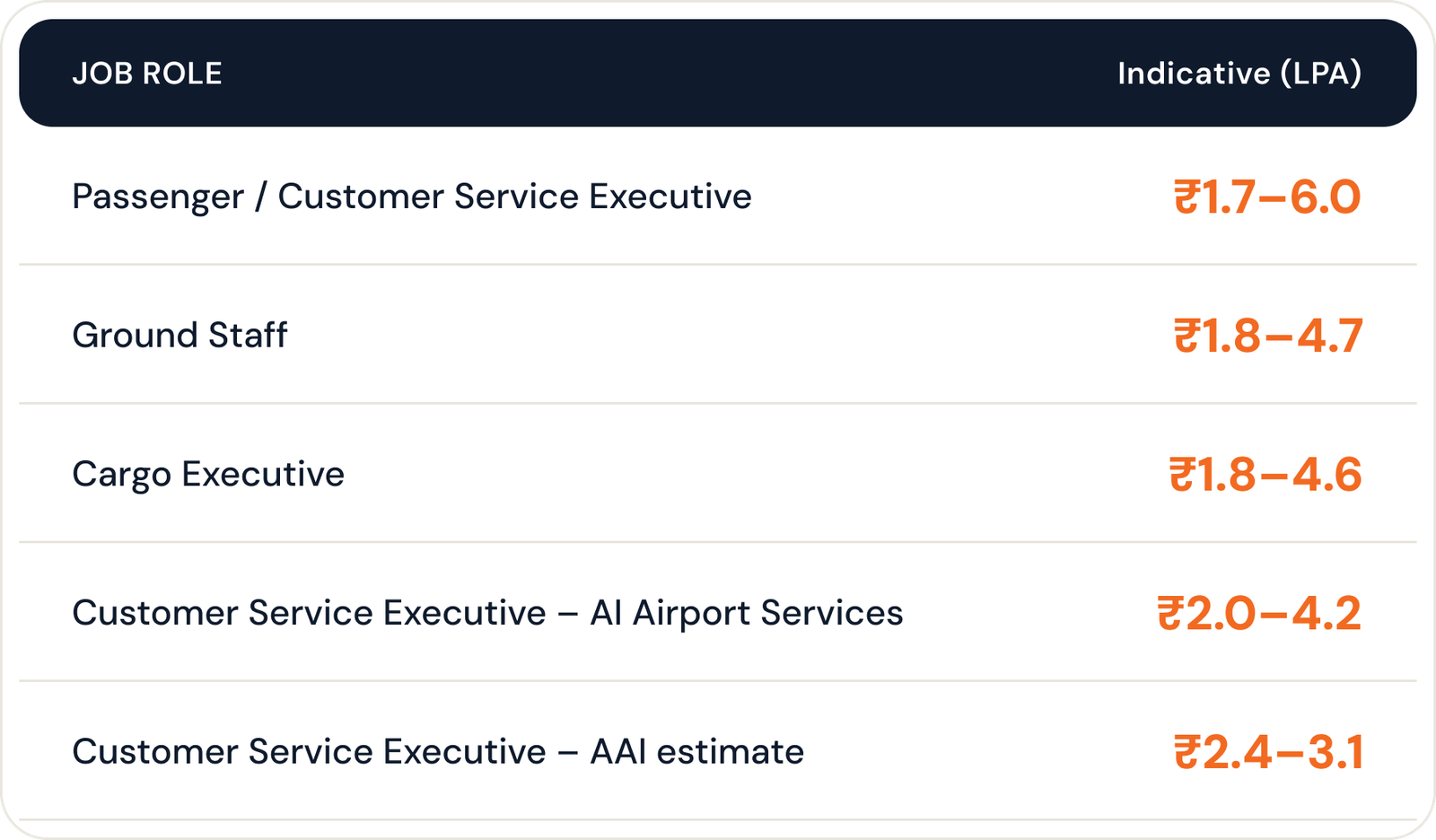
INDICATIVE SALARY RANGES

*These ranges are based on 2025 India salary data from AmbitionBox role pages and company salary pages.

Growth path

Begin in execution roles and grow into specialist, supervisory, and managerial tracks across design, merchandising, store operations, quality, buying, and category roles.

INDICATIVE SALARY RANGES

*These ranges are based on 2025 India salary data from AmbitionBox role pages and company salary pages.

How the career path can grow

A student may begin in a frontline execution role such as passenger service, ground staff, ticketing, cargo support, or terminal operations. With stronger service discipline, systems familiarity, airport-process knowledge, and workplace performance, the next layer can include roles such as senior customer service executive, shift in-charge, terminal supervisor, duty officer, or airport operations coordinator. Over time, the field can progress into broader airport operations, station management, cargo management, and airline service leadership roles.

Why this matters
This page is not promising instant senior roles. It is showing something more useful: a field where students can enter through visible, structured operational jobs and then build upward through discipline, exposure, and experience.

Not sure which role fits you?

Talk to our career counselors and find the pathway that matches your interests, strengths, and goals.

— Audience

Who Should Consider the School of Aviation

This school is designed for students who want a career path that is practical, structured, and directly linked to one of India’s most visible service and operations industries.

It is a strong fit for:

Students after Plus Two who want a serious job-oriented route

Graduates who want to convert a general degree into employability

Students who are drawn to service environments, airports, travel, and operations

Learners who want a field with visible professionalism and growth potential

Parents looking for a more structured and aspirational ROI-led career decision

— CURRICULUM

What Students Learn in the School of Aviation

This school is built around the logic of how airport and airline operations actually work. Students are introduced to the core areas that sit behind passenger movement, terminal flow, ground coordination, service delivery, cargo support, and airport systems.

Aviation and airport industry fundamentals

Passenger service and check-in processes

Terminal operations and airport workflow awareness

Ground handling basics

Ticketing and reservation support

Baggage and cargo process awareness

Airport stakeholders, customers, and partners

Safety, service standards, and regulatory awareness

Workplace communication, grooming, and reporting discipline

Airport technology, operational issues, and future developments

These focus areas align with airport operations fundamentals training that covers airport customers and partners, operational functions of the airport, rescue and firefighting support services, airport issues and challenges, and technological developments.

— SKILLS

Skills That Employers
Value in Aviation Roles

Students do not only learn concepts. They build job-facing skills that matter in day-to-day airport and airline work.

The skill-building focus includes:

This direction is consistent with how aviation training bodies frame readiness: not just knowledge, but the right mix of knowledge, skills, and attitude, supported through structured training and practical methods such as case study, role play, discussion, computer-assisted learning, and on-the-job training.

— HOW YOU'LL LEARN

How Learning Works at India Learns

The School of Aviation uses a structured delivery model designed to improve both understanding and workplace readiness.

The idea is simple:

students should not leave with only theoretical awareness. They should leave with clearer role understanding, stronger service confidence, and better readiness for entry-level work.

Concept-led classroom teaching

Students learn core aviation concepts in a clear and structured classroom environment.

Practical examples from airport and airline operations

Real industry examples help students understand how aviation services work in daily operations.

Applied assignments and role-based exercises

Students complete practical tasks and role-based activities to build confidence and workplace skills.

Expert-led sessions that connect learning to actual industry practice

Industry-focused sessions connect classroom learning with real aviation practices and expectations.

Digital learning support for continuity and reinforcement

Online learning support helps students revise, continue learning, and strengthen their understanding.

Assessments that focus on capability, not just recall

Assessments are designed to test practical understanding and skill application, not just memory.

— CAREER READINESS

Career Preparation Is Built Into the Journey

Technical knowledge alone is not enough. Aviation employers also value communication, grooming, punctuality, customer handling, and the ability to work in structured operating environments.

That is why this school also builds:

01

Workplace communication

Builds the confidence to communicate clearly in professional aviation environments.

02

Business English Support

Helps students improve English for workplace, customer, and interview situations.

03

Interview readiness

Prepares students to face aviation job interviews with clarity and confidence.

04

Resume support

Guides students in creating a professional resume for aviation and hospitality roles.

05

Grooming and presentation standards

Trains students to maintain the appearance and conduct expected in aviation careers.

06

Role awareness

Helps students understand different frontline and operational roles in the aviation sector.

07

Airport & Airline Hiring Exposure

Gives students insight into how airports and airlines select candidates for key roles.

This matters even more because aviation is a service industry with low tolerance for poor conduct, weak communication, or inconsistent professionalism. Students who build these habits early start stronger.

—Program highlight

Start with Our Professional Diploma in Airline and Airport Management

The flagship diploma under this school is designed for students who want a practical pathway into airport and airline roles. It combines domain learning, skill building, workplace preparation, and structured career support.

This is not positioned as another general course. It is designed as a more direct bridge between education and employability.

Choose a Career That Moves with India’s Growth

India will keep building more airports, adding more routes, improving regional connectivity, and expanding aviation infrastructure. Airports, airlines, and support operators will keep needing people who can manage passengers, service processes, coordination, documentation, and operations with discipline.

 If that is the kind of career direction you want, the School of Aviation is a serious place to begin.